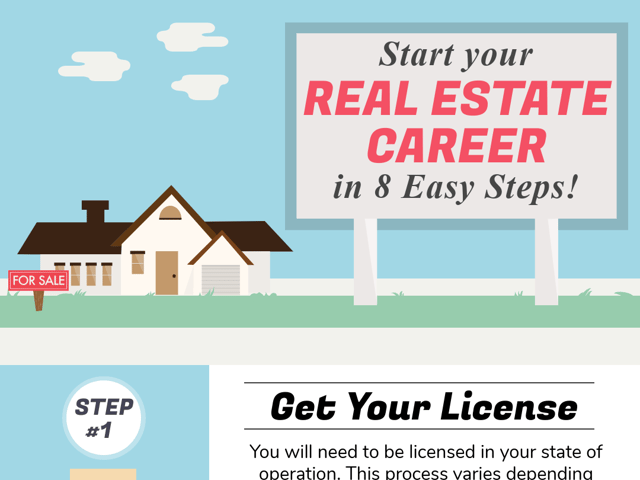
How to Start Your Real Estate Career
Starting a new career in real estate is an exciting endeavor, but before you start connecting with potential clients, there are a few preliminary steps necessary if you are to be a successful real estate broker.
1. Get Your license
You will need to be licensed in your state of operation. This process varies depending upon state regulations, but generally, it requires completing a set number of pre-licensing classroom hours (ranging from 40 to over 150 hours depending on the state) and paying a application fee.
While the licensing exam is not impossible, it has a notoriously high failure rate for first-time test-takers because it covers complex legal concepts, property math, and state-specific regulations. To pass on your first try, you need a structured study plan. It’s highly recommended to study well in advance by taking practice tests to get used to the question formats, reading comprehensive real estate study guides to master core concepts, and quickly testing your knowledge of industry jargon and simple formulas with flashcards.
2. Network
The best way to introduce yourself to the industry is by networking in the specific local market where you intend to work. This provides an opportunity to meet and establish relationships with established real estate agents even before you pass your exam.
-
Attend Open Houses: Introduce yourself to the hosting agents. Ask them what they love about their brokerage and the local market.
-
Join Local Groups: Look for local Real Estate Investors Associations (REIAs) or chamber of commerce events.
-
Leverage Social Media: Connect with local industry leaders on LinkedIn and Instagram to observe how they market themselves and interact with clients.
3. Join the National Association of Realtors
While membership is not technically required by law to practice real estate, it is typically required by most reputable brokerages. Joining NAR grants you the official title of REALTOR® (which binds you to a strict Code of Ethics) and, most importantly, is usually the only way to gain access to your local Multiple Listing Service (MLS). The MLS is the centralized database where all homes for sale are listed, and without it, doing your job effectively is nearly impossible.
4. Choose the Right Brokerage
In almost every state, you cannot practice real estate completely independently as a brand-new agent; you must hang your license under a managing broker. Don’t just join the first company that interviews you. You need to research different brokerage models to find the right cultural and financial fit.
| Brokerage Type | Pros | Cons |
|---|---|---|
| National Franchises (e.g., Keller Williams, RE/MAX) | Robust training programs, strong brand recognition, built-in tech tools. | Higher desk fees, structured commission splits, can feel corporate. |
| Boutique Local Firms | Localized expertise, direct mentorship from the owner, flexible environment. | Fewer corporate resources, smaller marketing budgets. |
| Virtual/Cloud Brokerages (e.g., eXp, Fathom) | High commission splits, low overhead, work-from-anywhere flexibility. | Requires high self-motivation; no physical office community. |
Pro Tip: When interviewing brokerages, focus less on the commission split and more on their mentorship and onboarding programs. A 90% split of $0 is still $0. You want a brokerage that will teach you how to get your first deal.
5. Invest in Post-Licensing and Practical Training
Obtaining your license teaches you how to keep transactions legal, but it does not necessarily prepare you for the day-to-day duties of a working agent. Once you pass your exam, your real education begins. You will need to seek out additional training—either through your brokerage’s internal classes, an experienced mentor, or external courses—covering critical business skills such as:
-
writing ironclad purchase agreements and contracts
-
using Customer Relationship Management (CRM) software to track leads
-
hosting high-conversion open houses
-
mastering the art of listing presentations and comparative market analyses (CMAs)
6. Develop a Comprehensive Business Plan
Since real estate agents operate as independent contractors, you are essentially launching a startup. You need a solid business plan to survive the first year. Your plan should explicitly outline:
-
Financial Goals: How much do you need to earn to cover personal expenses and business overhead?
-
Startup Capital: Do you have 3 to 6 months of living expenses saved? (Remember, commission checks can take months to start rolling in).
-
Lead Generation Strategies: Will you focus on cold calling, door knocking, open houses, paid social media ads, or networking?
-
Budget Allocations: Track your expenses for licensing renewals, MLS dues, lockbox access, marketing materials, and errors & omissions (E&O) insurance.
7. Build Your Sphere of Influence (SOI) and Brand Image
Your “Sphere of Influence” consists of everyone you already know: friends, family, former coworkers, neighbors, and acquaintances. Statistics show that the majority of a new agent’s business comes from people they already know or referrals from them.
-
Announce Your Career: Reach out to your entire contact list via email, mail, or social media to let them know you’ve entered the business.
-
Establish a Professional Presence: Secure a professional headshot, set up your business social media profiles, and ensure your branding is clean, trustworthy, and consistent.
-
Position Yourself as the Expert: Start sharing market updates, home-buying tips, or local community spotlights so that when someone in your network thinks of real estate, they automatically think of you.
8. Open for Business
When you have the legal credentials, a supportive brokerage, and the foundational tools in place, it’s time to launch. Start actively prospecting, setting up client consultations, and putting your marketing plan into action.
The first few months require immense grit, consistency, and a willingness to step outside your comfort zone. By laying a rock-solid foundation through proper exam preparation, strategic planning, and continuous learning, you will be fully equipped to handle your new duties and build a lucrative, lifelong career!

Keep Reading

Real Estate License Exam Blog
How Hard is the Texas Real Estate Exam?
Starting a real estate career in Texas is an exciting venture. One of t…

Real Estate License Exam Blog
The Changing Landscape of Real Estate Commissions: What You Need to Know
If you’re gearing up for your real estate exam, you’ve probably heard t…

Real Estate License Exam Blog
What’s on the California Real Estate Exam?
The California Real Estate Exam is a critical step for anyone looking t…